
Finding Leesburg Residents Through Records
There is no official master list of all Leesburg residents. The useful route depends on the question. An address can lead to a Loudoun parcel account, map, deed reference, permit, or dated house file. A historical surname may turn up in Balch Library census microfilm, a newspaper, a cemetery index, or a family file. A current public role can be confirmed through the Town or County office directory. Each result needs its own time, place, and record type.
Ownership and occupancy are different facts. A parcel record may identify an owner or a mailing address, while a deed identifies parties to a transaction. Neither alone confirms who is living at the location. The Virginia voter status service is a self or authorized-user check, not a browseable resident roll. Older directories and newspapers can document a household at a particular date, but they do not establish a current address.
- Normalize the address with the official USPS lookup, keeping the postal ZIP separate from the Town limit.
- Search the Loudoun property portal by address, PIN, tax map, or ZIP and record its update date.
- Open WebLogis for parcel geometry, plat clues, adjoining parcels, and the related assessment route.
- Use the Clerk's deed and historic-index materials to test the named party, legal description, and prior transfers.
- For an older household, pair a Balch collection finding with a dated source such as census, tax, newspaper, or a house file.
Note: Keep the source, locality, retrieval date, and the limited claim each record actually supports beside every research note.
Leesburg Offices Behind Resident Records
Leesburg is an incorporated town and the Loudoun County seat, so one address can lead to both Town and County custodians. The Town's FOIA Center handles existing municipal material such as council records, Town permits, historic-property files, and business-license requests. Loudoun County keeps the assessment, GIS, court, deed, probate, and much of the permit record trail. Virginia maintains statewide voter status, vital-record, and licensing systems. Keeping jurisdiction beside each result prevents a countywide name hit from being treated as a Town finding.
Loudoun Circuit Court Clerk
18 E Market Street
Leesburg, VA 20176
703-777-0270
Loudoun Real Estate Assessment
Countywide property and parcel records
Leesburg and Loudoun County
Portal access
Loudoun Elections Office
750 Miller Drive SE, Suite 150
Leesburg, VA 20175
703-777-0380
Town Records and Loudoun Custodians
The Town of Leesburg runs the municipal layer, including the Public Records and FOIA Center, community-development material, Town meeting records, and Thomas Balch Library. Loudoun County runs the property, mapping, court, election, and Clerk systems that serve the wider county. A Town mailing address does not change the custodian. The practical result is that a local address may have a Town permit, a County PIN, a Clerk deed, and a Virginia voter or vital-record route.
When a needed Town record is not online, use the Leesburg FOIA Center for existing records. State law, the Virginia Freedom of Information Act, Va. Code §§2.2-3700 through 2.2-3715, sets the access framework. The Town says reasonable actual charges can apply and an advance estimate can be requested. Ask for a defined date range, department, record type, and delivery format rather than a compiled person profile.
Leesburg Property Search Fields
The Loudoun Real Property Search is the current address-first route. It offers Property Address, Parcel ID Number, Tax Map Number, Advanced Searches, and Combined Search. County descriptions say the portal can provide assessment information, legal descriptions, sales, house characteristics, and GIS links, with weekly updates. The inspected page was in maintenance, so no live parcel result or public owner-name behavior should be assumed.
| Search control | How it helps in Leesburg | Important limit |
|---|---|---|
| Parcel ID | Direct PIN match; county guidance describes 12 characters. | Use the PIN with the map and deed reference. |
| Street number and street | Locates a situs address; basic search omits the suffix. | Historic name variants need separate checking. |
| ZIP Code | Narrows a postal-area search. | It is not proof of Town geography. |
| Tax Map and advanced fields | Supports map and property-history research. | Do not infer occupancy from an account. |
The companion WebLogis viewer can locate a parcel by address, PIN, map click, or assessment route. It adds plats, adjoining parcels, and distance tools. Its help specifically marks an owner-address-list query as internal only, so a public property search is not a public mailing-list function.
Current Leesburg Resident Directory Routes
Current directory-like sources do not cover the same people or prove the same thing. The property system is useful for a parcel or ownership question. Court information can establish a party role or case status, not residence. Voter status is a tightly controlled personal check. Virginia licensing and corporation records can confirm an official credential or filing field, but a filing address is not automatically a home or operating location. These differences make a two-source check essential.
| Leesburg source | What a result documents | Custodian | Access path |
|---|---|---|---|
| Real property account | Parcel, assessment, legal-description, and deed-related context when displayed | Loudoun Assessment | Public portal |
| Deed and historic index | Named parties to land instruments and dated document references | Circuit Court Clerk | Indexes, terminal, or specific copy request |
| Voter status or list product | Authorized status information or regulated voter-list fields | Virginia Elections | Personal check or declared-use request |
| Town public office listing | Official role and work contact | Town of Leesburg | Official Town source |
| Balch historical materials | Dated household, place, family, or community references | Thomas Balch Library | Collection-specific, often onsite |
Use the record that fits the question. A parcel starts an address trail, a deed tests land history, and a library source supplies historical context. A name that needs careful confirmation belongs in a Leesburg resident lookup workflow, where roles, dates, and same-name checks stay central.
Virginia Status Tools Have Narrow Uses
Virginia's public systems are not interchangeable with a residents directory. The court information service starts with a court or locality, civil or criminal path, then a name, case number, or hearing date. The voter status screen requires first name, last name, date of birth, last four digits of an SSN, locality, and an authorization affirmation. The Virginia Department of Corrections locator accepts a first-name prefix plus surname or a DOC ID and carries a daily-update notice. Use each only for the record category it actually returns.
The official Virginia case information screen shows the court-search route used for Loudoun matters.
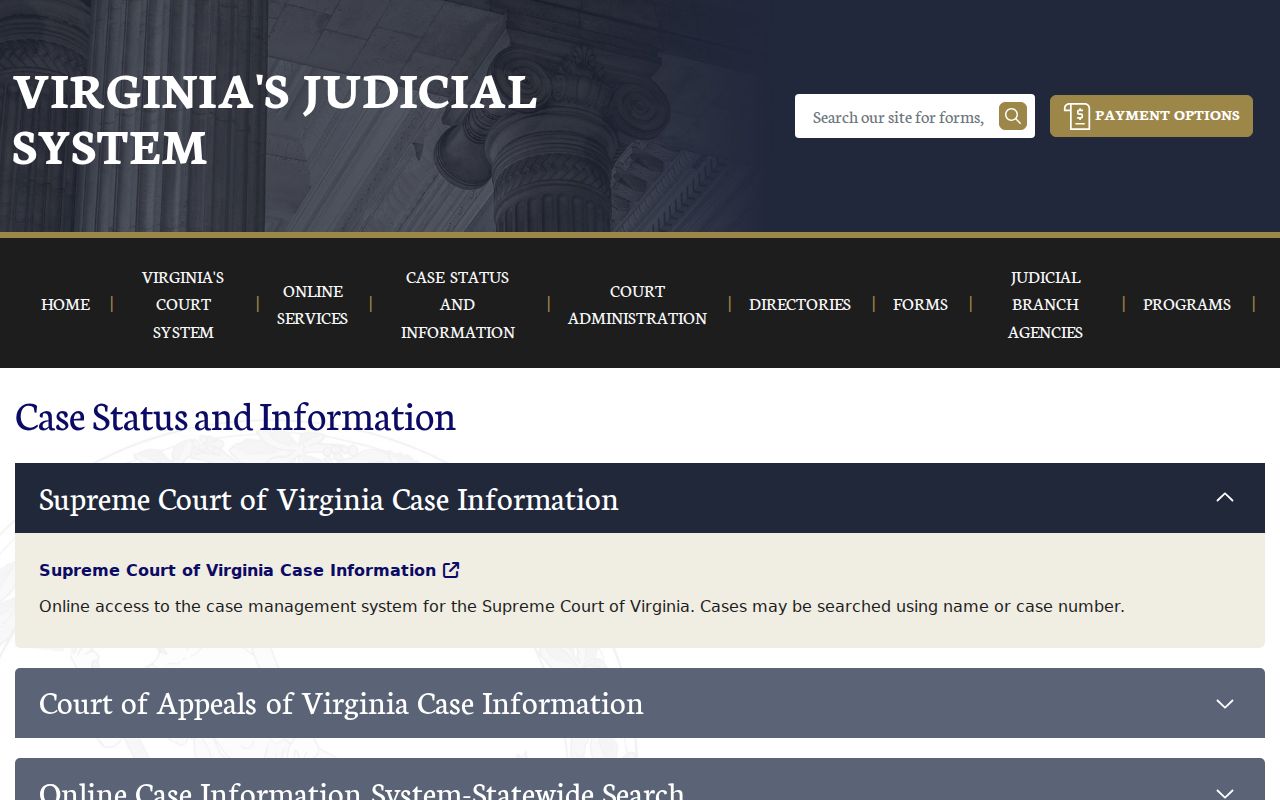
A court result can establish a party role or procedural status; documents and restricted material remain a Clerk-office question.
The Virginia Department of Corrections locator displays the distinct statewide custody-search route.

A locator result is neither a complete public-safety record nor evidence that someone lives in Leesburg.
Leesburg Names in Filing Searches
Some state records are useful for checking a public business or credential context. The State Corporation Commission CIS search accepts an entity name or ID and can return entity type, address, formation date, and status date. DPOR accepts a name, license number, address, or license type and notes that updates can lag. A registered address, credential address, or entity record must stay labeled as a filing or licensing field, not a claim about private residence.
The official Virginia SCC CIS search provides entity-name and entity-ID routes.
The result columns help distinguish a legal entity record from a person or place record.
The DPOR License Lookup is the state's public professional-verification screen.
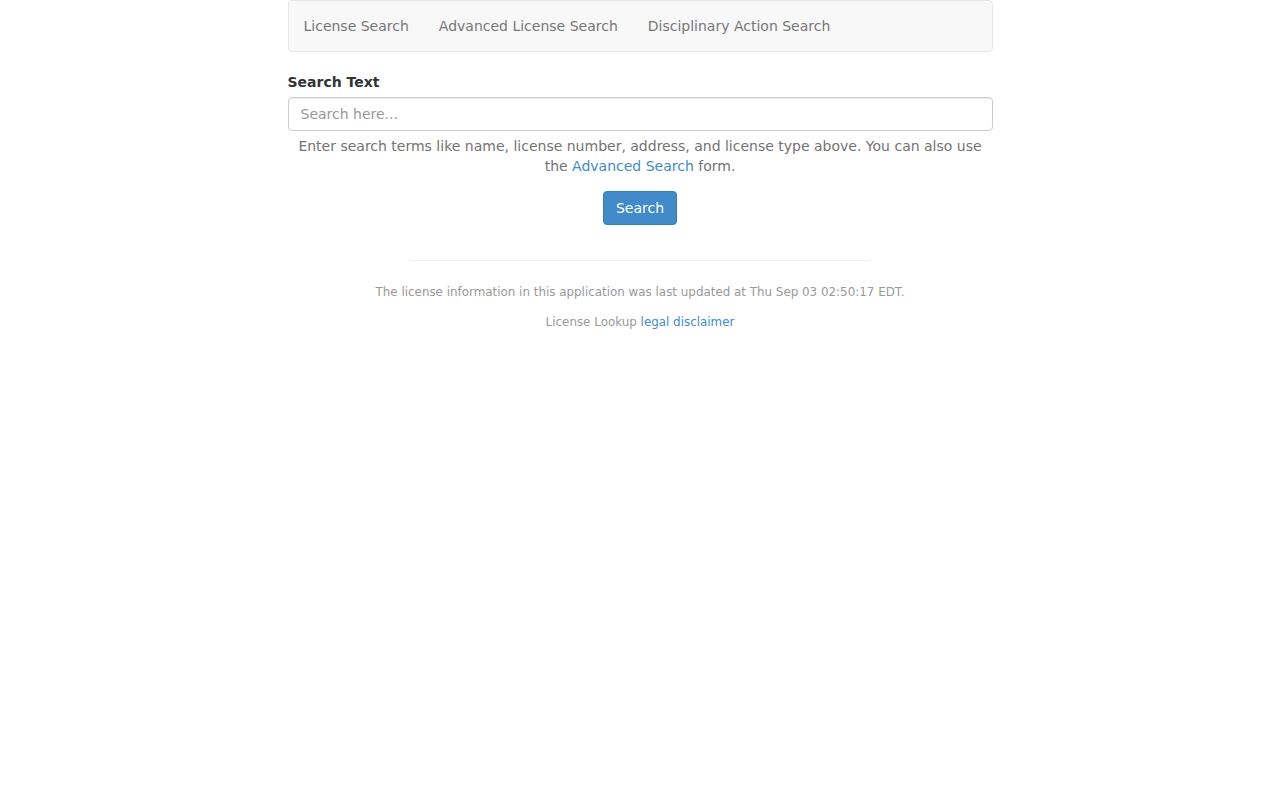
Record the credential type, status, and retrieval date if a verification is relevant, then check the named board's current information.
Loudoun Deed Indexes Follow Parcels
The Clerk's land records reach to 1757. Historic deed indexes are available in six alphabetical PDF runs from 1757 through 1903, while later work can require the Clerk's public terminals, deed books, or the account-gated TrakRecord route. Start a backward trail with the current parcel PIN and deed reference. Then compare grantor, grantee, instrument, book and page, legal description, lot, acreage, plat, road, and adjoining-owner clues before moving to the earlier transfer.
A grantor or grantee is a party to an instrument, not automatically an occupant. Remote historic copies are described at $0.50 per page plus a convenience charge, with $2 added for certification under the historic-record instructions. The Clerk asks for a specific reference rather than an open-ended research request. That discipline makes the land trail more reliable than a name-only search.
- Parcel or PIN
- The county identifier that ties an address to assessment and GIS material.
- Grantor and grantee
- The person transferring an interest and the person receiving it in a deed record.
- Legal description
- The lot, plat, acreage, or boundary language that identifies land beyond a street address.
- Criss-cross directory
- An address-first directory format used to look from a street entry toward a listed name or business.
Balch Holds Leesburg's Dated Evidence
Thomas Balch Library, at 208 W Market Street, is the local history layer that can connect an address or surname to a dated source. Its collections include census microfilm, family files, historic-house files, maps, newspapers, cemetery material, oral histories, tax sources, town minutes, deeds, wills, and visual records. The library's holdings include more than 200 local cemetery indexes, a 747-file architectural supplement, and more than 13,000 indexed images. Access varies: some materials are onsite, some are catalog or collection-guide leads, and some electronic resources require an in-library subscription.
The Balch collections guide is the best starting point for an identifier before a visit or request. Pair a library finding with the source date, collection name, item reference, and a second record type. A newspaper notice, cemetery entry, family file, or photograph gives historical context, not an unqualified current-location claim.
Note: Balch's material is strongest when a search records the collection, page or reel, date, and the exact historical question it answers.
A Leesburg Name Hit Needs Two Checks
An index hit is only a lead. A deed can place a party in a land transaction, a postal result can standardize delivery, an obituary can report a dated family notice, and a parcel account can describe land. None of those alone proves that the named person currently lives at the address. Compare independent sources with different purposes, such as a legal description plus a dated house file, or an office role plus the custodian's public directory.
Use records lawfully. Leesburg and Loudoun sources support personal, historical, civic, and property research. Do not use a record trail to stalk, harass, intimidate, or harm anyone.
Historical Leesburg Resident Directories
Printed and directory-like sources belong on a dated historical trail. Balch's microfilm includes census material for Loudoun and Virginia from 1810 through 1930, town council minutes from 1858 through 1982, deed and will indexes, local newspapers, church records, tax records, and telephone material. The William & Mary library guide also identifies Virginia city and business-directory coverage from 1801 through 1929. An exact Leesburg city-directory publisher and year run was not confirmed in the inspected local material, so it must be verified through the Balch catalog, onsite resources, or the Library of Virginia before being cited as a complete run.
Historic directories can identify a listed householder, occupation, address, or business in one edition. They work best beside deeds, census, tax, newspapers, and house files. The full collections and reading method are in the Leesburg city directory collections.
Old Leesburg Streets Need Both Names
Leesburg's 1759 plan and road history make historic names practical search keys. Carolina Road corresponds to King Street and U.S. 15; Potomac Ridge Road corresponds to Market Street and Virginia Route 7. Loudoun Street had an earlier role as the principal east-west route, and street termini changed through later surveys. A modern address may therefore fail in a deed, newspaper, directory, or map search until the earlier road name, lot, plat, or PIN is checked beside it.
This geography is why the records trail should keep situs address, mailing address, postal city, ZIP, jurisdiction, and historical street name in separate fields. The Leesburg street directory applies that approach to current address-keyed records without treating a postal label as proof of town residence.